Imagine a world where digital information blends seamlessly with your surroundings, enhancing your daily life in ways you never thought possible. This is the promise of augmented reality eyewear, a technology poised to revolutionize how you interact with information. From enhancing your morning commute to transforming your workspace, these innovative glasses are set to change your perspective.
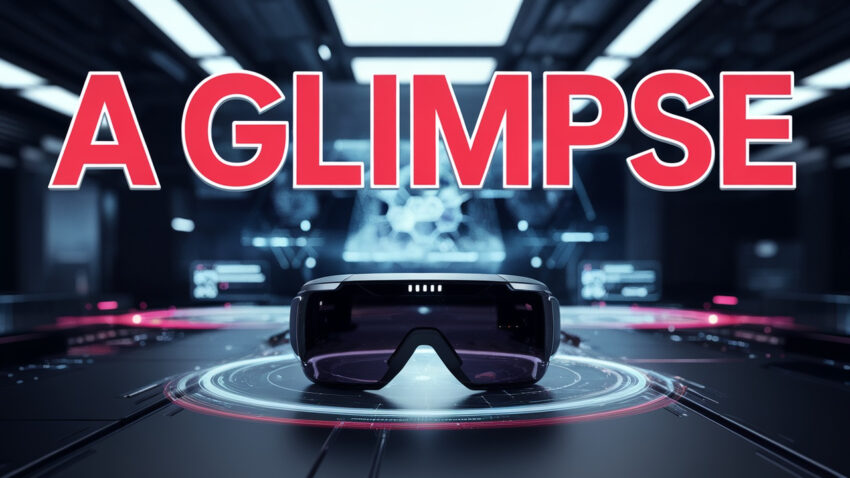
At the forefront of this revolution is Meta’s Orion prototype, a breakthrough in augmented reality technology. With a 70-degree display field, Orion seamlessly merges digital content with the physical world, offering an expansive and immersive experience. This advanced technology isn’t just about miniaturizing screens; it’s about creating a natural, intuitive way to interact with both the digital and real worlds.

As you explore the potential of these glasses, you’ll discover how they aim to make your life more convenient and engaging. Whether it’s through enhanced displays or sleek designs, augmented reality eyewear is not just a futuristic accessory—it’s a transformative tool. This section will delve into the key concepts, groundbreaking innovations, and the exciting possibilities that augmented reality holds for your future.
Introduction: Exploring AR Eyewear Trends
Smart glasses are redefining how we interact with information, blending the digital and physical worlds in innovative ways. These devices represent a significant leap forward in wearable technology, offering users a hands-free way to access data, communicate, and engage with their environment.
What Are Augmented Reality Eyewear?
Augmented reality eyewear, often referred to as smart glasses, are wearable devices that overlay digital information onto the real world. Unlike traditional screens, these glasses provide an interactive experience that enhances your surroundings. They combine cutting-edge technologies like display systems, voice commands, and contextual AI to deliver a seamless user experience.
The Growing Significance of AR in Daily Life
The impact of AR technology extends beyond consumer use, influencing industries such as healthcare, education, and manufacturing. For instance, professionals can use smart glasses to access critical information in real-time, improving efficiency and decision-making. This integration of AR into daily routines highlights its potential to transform various aspects of life and work.
| Feature | Current AR Eyewear | Future Advancements |
|---|---|---|
| Display Technology | Basic overlays with limited field of view | High-resolution, wide-field displays with enhanced clarity |
| Audio Systems | Standard speakers with environmental noise | Bone conduction systems for clear audio in noisy settings |
| Interactivity | Touch sensors and voice commands | Advanced gesture recognition and contextual AI |

As the technology evolves, smart glasses will become even more integral to our lives, offering improved functionality and usability. The future promises devices that are not just visually appealing but also more intuitive, making them indispensable tools for both personal and professional use.
The Evolution of AR Glasses
The journey of AR glasses from bulky prototypes to sleek, everyday accessories reveals a remarkable transformation. Early models, like the first smart glasses, were often cumbersome and limited in functionality. However, over the years, advancements in design and technology have led to more elegant and user-friendly devices.
Historical Milestones and Early Innovations
One of the earliest milestones was the introduction of basic display systems that could overlay digital information. These early designs laid the groundwork for modern AR technology. As the years passed, innovators focused on making these devices more wearable and practical for daily life. The shift from experimental prototypes to commercially viable products marked a significant turning point in the evolution of AR glasses.
Breakthroughs in AR Technology Over the Years
Recent advancements have brought about sleeker designs and improved functionality. For instance, the integration of bone conduction audio systems and high-resolution displays has enhanced the user experience. Today, models like the Ray-Ban Meta glasses exemplify how AR technology can blend seamlessly into everyday life, offering both style and practicality.
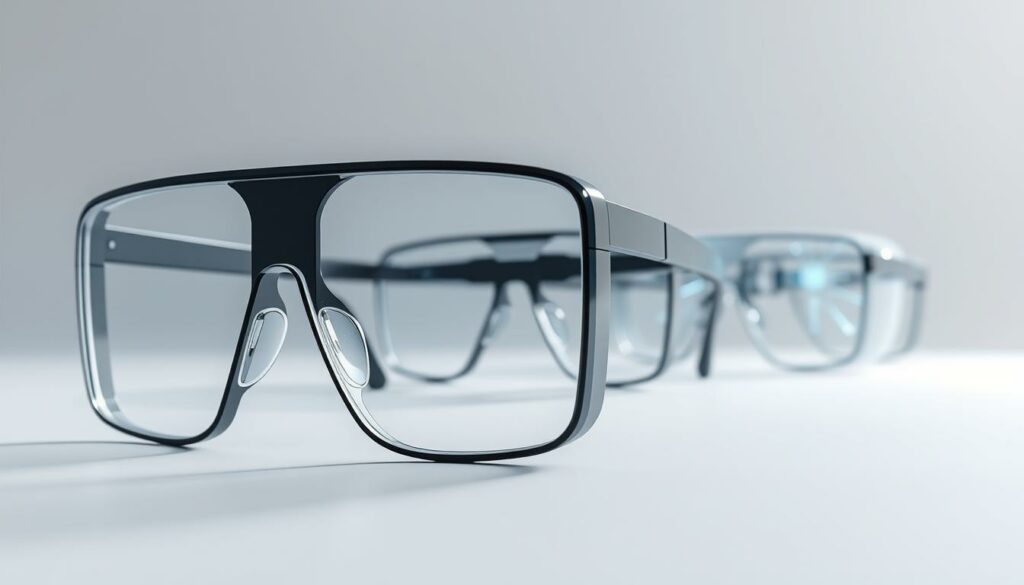
These innovations highlight the gradual shift toward creating devices that are both aesthetically pleasing and functional. As AR glasses continue to evolve, they promise to become an indispensable tool in our daily routines.
Augmented Reality Eyewear: A Peek Into The Future
Looking ahead, the evolution of smart glasses promises to bring advanced hardware and interaction capabilities into everyday life. Prototypes like Meta’s Orion offer a glimpse of what future AR glasses might deliver, blending cutting-edge technology with user-friendly design.
Prototype Innovations Versus Consumer Expectations
Meta’s Orion prototype stands out with its 70-degree field of view, a significant leap in display technology. This wide FOV, combined with high-resolution displays, provides an immersive experience. The use of silicon carbide lenses in Orion highlights a focus on durability and optical clarity, which are crucial for consumer-grade devices.
However, adapting these prototypes for mass production requires trade-offs. While Orion’s advanced features set a high standard, consumer expectations revolve around ease of use and seamless interaction. The challenge lies in maintaining high performance while making the technology accessible and affordable.
Evolving hardware and power management are key trends. Improved thermal management and lightweight designs ensure comfort, while advancements in battery life and efficiency enable longer use without compromising performance.
The future of AR eyewear hinges on balancing innovation with practicality. As companies like Meta work to reduce costs and enhance functionality, the next generation of smart glasses promises to be both powerful and consumer-friendly.
Innovative Technologies Powering AR Eyewear
Advancements in display technology and material science are driving the next generation of AR eyewear. These innovations aim to deliver a more immersive and user-friendly experience.
Silicon Carbide and Glass Lenses: Advantages and Challenges
Meta’s Orion prototype uses silicon carbide lenses, which offer exceptional durability and optical clarity. This material choice enhances display quality, making digital overlays sharper and more vibrant. However, integrating such advanced materials while maintaining a lightweight design presents significant engineering challenges.
Enhancing Visual Fidelity with Expanded Field of View
A wider field of view, like the 70-degree display in Meta’s Orion, significantly improves the user experience. This expanded view creates a more natural interaction between the digital and physical worlds. Achieving this while keeping the device lightweight requires careful balance and innovative engineering solutions.
- Technological Breakthroughs: Innovations in display technology and lens materials enable vivid, immersive experiences.
- Material Contributions: Silicon carbide and glass lenses enhance visual fidelity and durability.
- Design Challenges: Maximizing field of view while maintaining a lightweight, user-friendly design.
- User Impact: These advancements improve both technical performance and overall user application experience.
By integrating hardware and software seamlessly, AR eyewear creates a cohesive experience for diverse applications, from everyday use to specialized fields.
Design and Hardware: Shaping the Future of Smart Glasses
Design and hardware development play a crucial role in transforming smart glasses into an essential part of your daily life. Companies like Meta are pushing the boundaries with prototypes such as the Orion, which exemplify a perfect blend of miniaturization and aesthetic form factors.
Sleek Form Factors and Miniaturized Components
The integration of high-tech components into stylish, ergonomic designs is a key focus for manufacturers. Meta’s Orion prototype, with its 70-degree field of view, showcases how advanced hardware can be seamlessly integrated into a sleek form factor. The use of silicon carbide lenses ensures durability and optical clarity, though future consumer versions will likely switch to glass lenses to reduce costs.
Advancements in miniaturization are enabling more comfortable and stylish eyewear. For instance, the shift from bulky prototypes to lightweight, modern designs makes smart glasses more practical for everyday use. These improvements are not just about aesthetics; they represent a significant step toward making the technology accessible and user-friendly.
- Miniaturization: Enables more comfortable and stylish eyewear.
- Integration: Combines high-tech components into ergonomic designs.
- Development: Focuses on balancing advanced functionality with design elegance.
- Impact: Improved form factors pave the way for mainstream adoption.
As companies continue to refine their designs, the future of smart glasses looks promising. With a focus on both functionality and aesthetics, these devices are poised to become an indispensable part of your daily life.
User Experience: Interactivity and Intelligent Integration
The fusion of digital and physical worlds is revolutionizing how you interact with information every day. At the heart of this transformation is the integration of robust AI with intuitive digital interaction, creating a seamless and high-quality user experience.
Contextual AI and Seamless Digital Interactions
Next-generation AR devices are designed to understand and respond to your environment. By merging contextual AI with interactive digital content, these devices create a natural and intuitive way to access information. For instance, smart glasses can now recognize your location and provide real-time, relevant data, enhancing your daily tasks with minimal effort.
One of the key challenges in developing these devices is balancing sophistication with ease of use. While advanced AI offers powerful features, the interface must remain simple and intuitive. This balance ensures that users can enjoy the benefits of cutting-edge technology without feeling overwhelmed.
| Feature | Current AR Eyewear | Future Advancements |
|---|---|---|
| AI Integration | Basic contextual awareness | Advanced AI with real-time adaptability |
| Interaction Methods | Touch and voice commands | Gesture recognition and predictive AI |
| User Experience | Functional but limited interactivity | Seamless, intuitive, and responsive |
Real-life examples of enhanced digital interactions include smart glasses providing instant language translation or offering navigation guidance based on your surroundings. These applications demonstrate how AI-driven contextual awareness can significantly improve your daily interactions.
Maintaining a balance between device sophistication and ease of use is crucial for widespread adoption. As these technologies evolve, the focus remains on creating devices that are both powerful and user-friendly. The quality of interaction plays a pivotal role in determining the overall impact of AR technology on your daily life and work.
Industry Impact: Transforming Daily Life and Business
Augmented reality glasses are reshaping industries and daily routines, offering practical solutions that enhance efficiency and engagement. From healthcare to retail, and education, these devices are proving to be invaluable tools for both professionals and consumers.
Practical Applications in Healthcare, Retail, and Education
In healthcare, AR glasses like AccuVein are improving medical procedures by projecting vein locations, enhancing accuracy. Retailers such as IKEA and Warby Parker use AR for virtual try-ons and product previews, boosting customer satisfaction. In education, platforms like Magic Leap create immersive learning experiences, making complex concepts more accessible.
Enhancing Productivity and Entertainment Experiences
AR glasses streamline workflows, allowing professionals to access real-time data hands-free. In entertainment, they offer immersive experiences, such as virtual concerts and interactive games, enhancing user engagement and satisfaction.
| Industry | Application | Impact |
|---|---|---|
| Healthcare | Vein visualization | Improved procedure success rates |
| Retail | Virtual try-ons | Increased customer satisfaction |
| Education | Immersive learning | Enhanced understanding of complex topics |
These advancements demonstrate how AR glasses are transforming industries, offering solutions that save time, enhance productivity, and provide engaging content. As companies continue to innovate, the impact of AR technology will only grow, shaping a future where these devices are indispensable in both professional and personal life.
The Competitive Arena: Meta, Apple, and Beyond
The race to dominate the AR market is heating up, with Meta and Apple leading the charge. These tech giants are pushing the boundaries of innovation, offering unique takes on what the future of smart glasses could look like.
Comparative Features and Market Positioning
Meta’s Orion prototype stands out with its 70-degree field of view, a significant leap in display technology. This wide FOV, combined with high-resolution displays, provides an immersive experience. The use of silicon carbide lenses in Orion highlights a focus on durability and optical clarity, which are crucial for consumer-grade devices.
Apple’s Vision Pro, priced at $3,500, targets a premium market. It runs on VisionOS, based on iPadOS, offering a holistic digital environment integrated with other Apple products. While it’s packed with advanced features, the ecosystem-focused approach may appeal more to loyal Apple users.
Samsung is also making waves, with rumors of AR glasses unveiling soon. Their expertise in foldable devices could bring unique designs to the table. Meanwhile, companies like Xreal and Haptikos are carving out niches with specialized features and affordability.
| Company | Key Features | Market Positioning |
|---|---|---|
| Meta | 70-degree FOV, Silicon Carbide Lenses | High-end, focused on immersive experience |
| Apple | Premium Build, VisionOS Ecosystem | Luxury segment with integrated Apple ecosystem |
| Samsung | Foldable Design Expertise | Mid-range with innovative design |
Each company’s approach defines the future landscape of AR technology. Meta emphasizes advanced hardware, Apple focuses on ecosystem integration, and Samsung brings design innovation. These strategies highlight how innovation drives continuous improvements in this competitive arena.
Navigating Development Challenges and Cost Implications
As Meta glasses evolve from prototypes to consumer-ready products, developers face significant challenges. Balancing innovation with affordability is crucial for mainstream adoption.
Balancing Cutting-Edge Innovation with Affordability
Advanced materials like silicon carbide lenses in Meta’s Orion prototype offer durability and clarity but are costly. Switching to glass lenses could reduce costs without sacrificing the immersive experience. This shift affects the formand functionality, ensuring the glasses remain practical for the physical world.
Overcoming Production and Privacy Hurdles
Production costs are high, with software development ranging from $200k to $2 million. Hardware integration can cost up to $500k, and testing adds another $50k to $300k. Privacy is another concern, requiring strategies to protect user data while maintaining a seamless AR experience.
- High Material Costs: Expensive lenses impact affordability.
- Production Expenses: Development and testing are costly.
- Privacy Concerns: Essential to protect user data.
Addressing these challenges is vital for the successful adoption of AR eyewear, ensuring they are both accessible and secure.
Future Trends: Spatial Computing and AI Advancements
As technology advances, the integration of spatial computing and AI into AR glasses is set to redefine how we interact with information. Industry events, such as Meta Connect, have highlighted the growing need for smarter lens technologies to support these advancements.
Recent announcements from Meta and other leaders showcase a clear shift toward integrating spatial computing, enabling more immersive and interactive experiences. The need for advanced AI-driven lenses is becoming increasingly important to meet the demand for seamless information access and enhanced visual fidelity.
| Trend | Current Status | Future Advancements |
|---|---|---|
| Spatial Computing | Emerging with limited applications | Advanced integration for immersive experiences |
| AI in Lenses | Basic AI for contextual awareness | Smart lenses with real-time adaptability |
| Lens Technology | Focus on durability and clarity | Improved designs for sharper displays |
The evolution of AR glasses is driven by the need for smarter technologies. As these devices advance, staying informed about trends like spatial computing and AI integration becomes crucial for embracing the next generation of AR.
Expanding Applications: From Gaming to Professional Solutions
AR glasses are transforming industries and daily life, offering practical solutions that enhance both entertainment and professional settings. Whether you’re a gamer or a business professional, these devices provide interactive experiences that make tasks easier and more engaging.
Real-World Use Cases Across Industries
From healthcare to retail, AR glasses are proving to be invaluable tools. In healthcare, surgeons use AR glasses for real-time guidance during procedures, while retailers use them for virtual try-ons and product demonstrations. This hands-free assistance is revolutionizing how industries operate.
- Professional solutions in manufacturing and remote assistance are expanding, offering precise guidance and enhancing efficiency.
- Gaming experiences become more immersive, with interactive environments that draw players into virtual worlds.
- Business applications provide real-time data access, enabling better decision-making and streamlined workflows.
- AR glasses offer a glimpse into enhanced customer interactions, improving satisfaction and engagement in retail settings.
These devices are not just for entertainment; they’re powerful tools that transform both creative and operational aspects of modern businesses. As AR technology advances, its applications will continue to grow, shaping a future where interactive experiences are the norm.
Conclusion
As technology continues to advance, the potential of AR glasses to transform daily life becomes increasingly evident. Meta’s prototypes and industry trends highlight the transformative capability of these devices, offering a glimpse into a future where digital information seamlessly integrates with the physical world.
The key innovations and competitive dynamics position AR glasses as a game-changer. Improved design, integration, and user experience are set to benefit both consumers and businesses. For instance, professionals can access real-time data hands-free, while consumers enjoy immersive entertainment experiences. These advancements demonstrate the capability of AR glasses to merge digital information with everyday life seamlessly.
You will leave with a clear understanding of how these trends can impact your future interactions with technology. The integration of AI and spatial computing, for example, promises to enhance user experience further. Stay informed about emerging developments as AR glasses continue to evolve and reshape the world.
FAQ
How do smart glasses enhance your daily life?
Smart glasses integrate technology seamlessly into your routine, offering real-time information, navigation, and assistance. They make tasks easier, from checking schedules to getting directions, all through a display in your field of view.
What makes Meta Glasses stand out in the industry?
Meta Glasses are known for their advanced hardware, design, and application ecosystem. They focus on creating an immersive experience by blending the physical world with digital interaction.
What industries benefit most from AR Glasses?
Industries like healthcare, retail, and education see significant gains. For example, surgeons can use them for real-time data, while retailers can offer virtual try-ons, enhancing productivity and user experience.
How do AR Glasses improve learning and development?
They provide interactive, immersive lessons, making complex concepts easier to grasp. Students can visualize 3D models or historical events, creating a more engaging learning environment.
What are the main challenges in developing AR Glasses?
Key challenges include balancing hardware miniaturization with display quality, ensuring user comfort, and addressing privacy concerns. These factors are crucial for widespread adoption.
Can AR Glasses be used without an internet connection?
While many features require connectivity, some applications like basic information display or navigation can function offline, ensuring usability in areas with limited network access.
What does the future hold for AR Glasses?
The future is promising, with advancements in spatial computing and AI. Expect more integrated and intelligent devices that further blur the line between the physical and digital worlds.

Have you ever wondered how your eyes navigate through a page of text or scan a crowded space? The science Read more

From corrective lenses dating back to the 13th century to today's cutting-edge innovations, the eyewear industry has come a long Read more

Imagine a world where your glasses double as your speakers, offering a seamless hands-free experience. This innovative technology is now a reality, thanks Read more

Imagine a world where glare and reflections no longer interfere with your vision. This is the reality that anti-reflective coatings bring to Read more