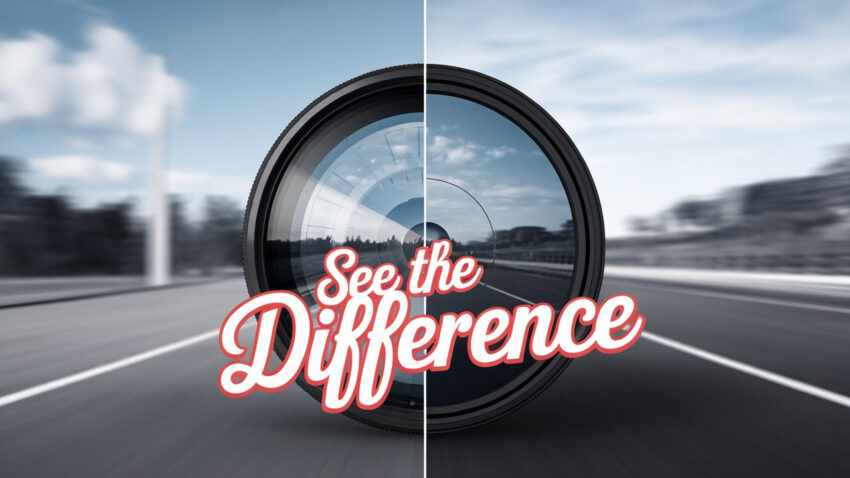
Imagine a world where glare and reflections no longer interfere with your vision. This is the reality that anti-reflective coatings bring to your eyewear. By minimizing unwanted reflections and enhancing light transmission, these coatings significantly improve visual clarity and comfort. Whether you’re wearing everyday glasses, sunglasses, or camera lenses, the impact is undeniable.

The science behind anti-reflective coatings lies in their ability to reduce glare and enhance light transmission. For instance, they can allow up to 98% of light to pass through, compared to untreated lenses which reflect a significant portion. This not only reduces eye strain but also improves contrast, making colors appear more vivid and defined.
Beyond functionality, these coatings offer cosmetic benefits. They make your glasses less noticeable, allowing others to see your eyes more clearly. Historically, early forms of anti-reflective coatings were less effective, but modern advancements have led to high-performance solutions that are both durable and versatile.
From reducing glare while driving at night to enhancing visibility in low-light conditions, the advantages of anti-reflective coatings are vast. This guide will explore these benefits in depth, helping you understand why they are a worthwhile investment for anyone seeking clearer, more comfortable vision.
Introduction to Anti-Reflective Coatings
Anti-reflective coatings are a game-changer in optics, offering a world where reflections and glare no longer obstruct your view. These thin, transparent layers, often made of metal oxides like magnesium fluoride, are applied to lens surfaces to minimize unwanted reflections and enhance light transmission.
What Are Anti-Reflective Coatings?
Anti-reflective coatings work by using the principle of destructive interference. When light hits a lens, a portion reflects off the front and back surfaces. The coating ensures these reflected waves cancel each other out, reducing glare and allowing more light to pass through.
- Thin, transparent layers minimize reflections.
- Use destructive interference to reduce glare.
- Enhance light transmission for clearer vision.
History and Evolution in Lens Technology
The development of anti-reflective coatings began with Lord Rayleigh’s discovery in 1886. Over time, they evolved from simple tarnish effects to advanced, tailored layers. Modern coatings use interference-based designs, offering improved performance and durability.
Today, these coatings are essential in eyewear and optical systems, enhancing both vision quality and cosmetic appeal. Innovations continue to transform lens manufacturing, ensuring clearer and more comfortable vision for users.
The Science Behind Vision-Enhancing Lens Coatings
Understanding how lens coatings improve vision involves delving into the principles of light interaction. These coatings are designed to minimize reflections and maximize light transmission, ensuring clearer vision for the wearer.
Interference and Destructive Reflections Explained
The core of anti-reflective technology lies in thin-film interference. By applying a layer of material, typically a quarter of the wavelength of light, reflections from the front and back surfaces of the lens cancel each other out. This destructive interference reduces glare and allows more light to pass through, enhancing clarity.
Understanding Light Transmission and Fresnel Equations
The Fresnel equations play a crucial role in calculating how light behaves at each surface of the lens. These equations help determine the reflection and transmission coefficients, ensuring that the coating optimizes light passage. This results in nearly 98% of light reaching the eye, significantly reducing eye strain and improving visual acuity.
- Thin-film interference minimizes reflections through destructive interference.
- Fresnel equations calculate light transmission and reflection coefficients.
- Optimized coatings allow up to 98% light transmission for clearer vision.
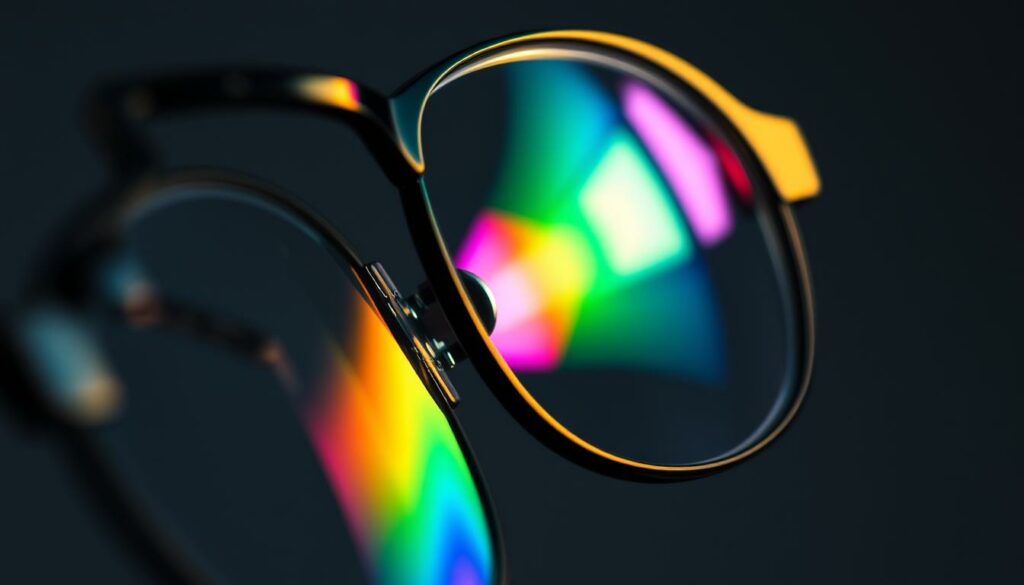
These scientific principles are applied in various optical devices, from eyeglasses to camera lenses, demonstrating their versatility and effectiveness in real-world applications. The precise engineering of these coatings ensures that they offer both functional and aesthetic benefits, making them a valuable addition to any eyewear.
Benefits and Applications of Anti-Reflective Coatings
Anti-reflective coatings offer numerous benefits, making them a valuable addition to your eyewear. These coatings significantly reduce glare from both the front and back surfaces of lenses, enhancing contrast sensitivity and improving visibility in various lighting conditions.
Glare Reduction and Enhanced Contrast
One of the primary advantages of anti-reflective coatings is their ability to minimize glare. By reducing unwanted reflections, these coatings allow more light to pass through the lens, resulting in clearer vision. This is particularly beneficial for activities like night driving, where glare from oncoming headlights can be a significant issue. The enhanced contrast provided by these coatings also makes colors appear more vivid and defined, improving overall visual clarity.
Relief from Digital Eye Strain and Night Driving Support
For those who spend extended periods in front of screens, anti-reflective coatings can help reduce digital eye strain. By minimizing reflections and allowing more light to reach the eye, these coatings can make prolonged screen use more comfortable. Additionally, the reduced glare and improved contrast provided by these coatings make them an excellent choice for night driving, where visibility is crucial.
| Benefit | Description |
|---|---|
| Glare Reduction | Minimizes reflections, improving visibility in bright environments. |
| Enhanced Contrast | Improves color vividness and visual clarity. |
| Digital Eye Strain Relief | Reduces discomfort during prolonged screen use. |
| Night Driving Support | Decreases glare from oncoming headlights, enhancing safety. |
These coatings also offer additional features such as water- and grease-repellency, maintaining lens clarity. Their cosmetic advantage minimizes distracting reflections, making your glasses less noticeable. Whether for everyday use or specialized eyewear, anti-reflective coatings provide both functional and aesthetic benefits, enhancing your overall vision experience.
Maximizing Vision Benefits with Anti-Reflective Coating
Discover how anti-reflective coatings can elevate your everyday vision. These coatings are designed to strike a perfect balance between clarity and ease of maintenance, ensuring your lenses perform optimally in any setting.
Optimizing Lenses for Everyday Use
Studies reveal that lenses with anti-reflective coatings allow an impressive 99.5% of light to pass through, compared to just 92% for uncoated lenses. This significant difference reduces eye strain and enhances visual clarity, making it ideal for both corrective eyewear and sunglasses.
- Practical Maintenance Tips: Use microfiber cloths to clean your lenses, as they gently preserve the coating. Storing your glasses in a protective case prevents scratches and damage.
- Enhanced Vision in Daily Life: The hydrophobic properties of these coatings make cleaning easier, while their ability to minimize reflections improves photogenic outcomes and reduces glare during night driving.
- Expert Advice: Consult with an optician to tailor your lenses to your specific needs, whether for work, home, or outdoor activities.
By integrating anti-reflective coatings into your eyewear, you not only gain clearer vision but also experience reduced eye strain, making them a worthwhile investment for everyday use.
Innovative Coating Technologies and Their Impact
Modern advancements in lens technology are revolutionizing how we experience vision. Inspired by nature and driven by cutting-edge science, these innovations are setting new benchmarks for optical clarity and performance.
Moth Eye Structures and Biomimicry in Modern Lenses
Nature has long provided solutions to human challenges. The moth eye, with its unique sub-wavelength nanostructures, is one such inspiration. These structures effectively reduce reflection by scattering light across different angles, achieving near-zero reflectivity. This biomimetic approach is now being integrated into modern lenses, significantly enhancing their performance and reducing glare.
By mimicking the moth eye’s pattern, scientists have developed coatings that allow more light to pass through the lens. This not only improves visual clarity but also minimizes the annoying reflections that can interfere with your vision. Whether you’re wearing glasses or using a camera lens, these bio-inspired coatings offer a smarter way to manage light.
Multi-Layer Interference and Advances in Photolithography
Multi-layer interference coatings take light management to the next level. By applying alternating layers of materials with varying refractive indices, these coatings create a destructive interference effect. This reduces reflections even further, allowing more light to reach your eye for clearer vision.
Advances in photolithography have made it possible to create these complex layers with precision. This technology enables the production of coatings that are not only effective but also durable. For example, Canon has successfully implemented subwavelength structures in their lenses, demonstrating the real-world potential of these innovations.
These cutting-edge technologies are transforming industries beyond eyewear. From microelectronics to solar panels, the applications are vast. The impact is evident in both high-tech optical systems and everyday devices, showcasing the versatility of these advancements.
As research continues to push boundaries, the future of lens coatings looks promising. With ongoing innovations, we can expect even higher standards of optical clarity and performance. Embracing these technologies means not just improving vision but also enhancing the way we interact with the world around us.
Conclusion
In conclusion, anti-reflective coatings have revolutionized the way we experience vision, offering significant improvements in optical performance and everyday convenience. By reducing glare and enhancing light transmission, these coatings provide clearer vision and reduce eye strain, making them ideal for activities like night driving and prolonged screen use.
The technical advancements, such as interference principles and multi-layer designs, ensure that these coatings are both effective and durable. Whether you’re looking to enhance your eyewear or optical devices, anti-reflective coatings offer a smart choice for improving vision quality.
As technology continues to evolve, the future of anti-reflective coatings promises even greater innovations. Consider consulting with an optician to explore how these coatings can optimize your vision, ensuring a clearer and more comfortable viewing experience.
FAQ
How do anti-reflective coatings reduce glare?
Anti-reflective coatings minimize glare by reducing the amount of light that bounces off the surface of your lenses. This is especially beneficial for night driving or when facing bright sources of light, as it enhances your ability to see clearly without strain.
Can anti-reflective coatings be applied to existing glasses?
Yes, anti-reflective coatings can often be applied to existing lenses by an optician. However, the effectiveness may vary depending on the condition and material of your lenses. It’s best to consult with a professional to determine the best option for your eyewear.
How do anti-reflective coatings improve vision clarity?
By reducing reflections and glare, anti-reflective coatings allow more light to pass through the lens, enhancing contrast and improving your overall vision. This makes them ideal for both everyday use and activities like driving at night.
Are anti-reflective coatings suitable for all types of glasses?
Anti-reflective coatings are versatile and can be applied to most types of lenses, including prescription glasses, sunglasses, and even specialty eyewear. However, certain lens materials may require specific coating formulations to ensure optimal performance.
How long do anti-reflective coatings last?
The durability of anti-reflective coatings depends on the quality of the coating and how well you maintain your lenses. Proper care, such as using a microfiber cloth and avoiding harsh chemicals, can help extend the life of the coating.
Can anti-reflective coatings help with digital eye strain?
Yes, anti-reflective coatings can reduce digital eye strain by minimizing glare from screens. This makes them a great choice for people who spend a lot of time in front of computers or other digital devices.
How do anti-reflective coatings enhance contrast?
By reducing reflections and allowing more light to pass through the lens, anti-reflective coatings improve the contrast of what you see. This is particularly noticeable in low-light conditions or when there’s a high level of ambient light.
Are anti-reflective coatings scratch-resistant?
Many modern anti-reflective coatings include scratch-resistant properties, but this can vary depending on the specific product. Always check the specifications or consult with your optician to ensure you’re getting a coating that meets your needs.
How do anti-reflective coatings benefit night driving?
Anti-reflective coatings reduce glare from oncoming headlights, making it easier to see the road at night. This can significantly improve your safety and comfort while driving in low-light conditions.
Can anti-reflective coatings be used on sunglasses?
Yes, anti-reflective coatings are often applied to sunglasses to reduce glare and enhance visibility. They work well in combination with tinted lenses to provide optimal vision in bright environments.
How do anti-reflective coatings affect light transmission?
Anti-reflective coatings increase light transmission by reducing the amount of light that reflects off the lens surface. This allows more light to pass through, improving your vision and reducing eye strain.
Are you looking for a way to combine corrective vision with sun protection? Prescription sunglasses offer the perfect blend of Read more
Imagine a world where your glasses double as your speakers, offering a seamless hands-free experience. This innovative technology is now a reality, thanks Read more
Blue light, a type of high-energy visible (HEV) light with wavelengths between 400 and 500 nanometers, has become a hot Read more

Imagine eyewear that adjusts to changing light conditions seamlessly, providing optimal vision and comfort whether you're indoors or outdoors. Modern self-tinting Read more