
In today’s digital age, eye strain has become a common issue for many of us. Whether you’re working on a computer, reading on your tablet, or scrolling through your phone, prolonged screen time can take a toll on your vision. According to sources like Johns Hopkins Medicine and Verywell Health, millions of Americans experience symptoms like dry eyes, headaches, and blurred vision due to extended screen use.
Did you know that reading on digital devices for hours can significantly increase your risk of eye strain? The constant focus on screens reduces blinking rates, leading to dry and irritated eyes. Additionally, poor posture and improper screen distance can exacerbate discomfort. However, there’s good news: simple remedies like lubricating eye drops, scheduled eye exams, and exercises can make a big difference.
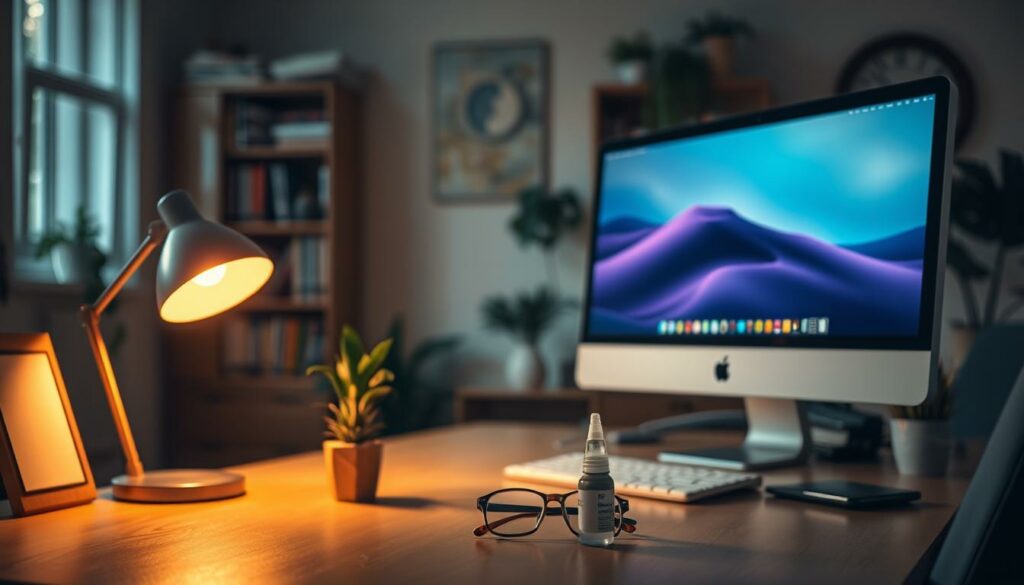
By incorporating the 20-20-20 rule—looking at something 20 feet away for 20 seconds after every 20 minutes of screen time—you can reduce discomfort. Improving daily habits, such as taking regular breaks and adjusting your screen settings, can also enhance your vision health. This guide will walk you through practical tips, exercises, and remedies to alleviate eye strain and protect your eyes for the long term.
Understanding Eye Strain: Symptoms, Causes, and Risk Factors
Eye strain, also known as digital eyestrain, is a common condition in today’s screen-dominated world. Recognizing its symptoms and understanding its causes can help you take proactive steps to protect your vision.
Recognizing the Warning Signs
Common symptoms include red, watery eyes, blurred vision, and headaches. You might also experience irritated eyes or heavy eyelids. These signs often appear after extended screen time or focused activities like reading or driving.
Identifying Contributing Factors
The primary cause of eye strain is prolonged focusing on digital screens, which reduces blinking rates. Environmental factors like glare and dry air can worsen symptoms. Additionally, uncorrected vision issues and poor posture contribute to discomfort. According to studies, approximately 50-90% of computer users experience some form of digital eyestrain, with those using screens for over two hours daily being at higher risk.

Understanding these factors is crucial for effective prevention and relief. By addressing both symptoms and causes, you can reduce the risk of eye strain and maintain healthy vision.
Digital Eye Strain Prevention: Essential Tips for Your Screen Time
Preventing digital eye strain is easier than you think. Simple adjustments to your screen time habits and device settings can make a significant difference. This section shares practical tips to help you protect your vision while using digital devices.
Implementing the 20-20-20 Rule
The 20-20-20 rule is a straightforward technique to reduce discomfort. Every 20 minutes, look at something 20 feet away for 20 seconds. This exercise helps relax your eyes and maintain focus. To make it easier, set a timer or reminder on your device to ensure you take these breaks regularly.
Optimizing Screen Brightness and Contrast
Adjusting your screen settings can significantly improve comfort. Set the brightness and contrast to match the lighting around you. Avoid screens that are too bright or too dim compared to your surroundings. Position your device about an arm’s length away and slightly below eye level to reduce strain.
By following these tips, you can create a more comfortable viewing experience and protect your vision health. Remember, small changes today can lead to long-term benefits for your eyes.
Effective Eye Exercises for Relaxation and Focus
Modern lifestyles often lead to prolonged screen time, making eye discomfort a common issue. However, simple exercises can provide significant relief and improve your visual clarity. These activities are designed to strengthen your eye muscles and reduce fatigue, helping you stay focused during daily tasks.
Eye Movement and Focusing Drills
Start with eye movement exercises. Look straight ahead, then shift your gaze to the left and hold for a few seconds. Repeat this on the right. This drill helps relax the muscles around your eyes. Next, focus on a distant object for 10-15 seconds, then switch to something nearby. This focusing drill improves your ability to adjust between tasks.
Palming and Blinking Techniques
Palming is a simple yet effective method. Rub your palms together to warm them, then gently place them over your closed eyes. This blocks out light and allows your eyes to relax. Blinking exercises are equally beneficial. Blink rapidly for 10-15 seconds every hour to redistribute the tear film and keep your eyes moist.
| Exercise Type | Duration | Benefits |
|---|---|---|
| Eye Movement Drills | 5-10 minutes | Relaxes eye muscles, improves focus |
| Focusing Drills | 5-10 minutes | Enhances visual clarity and adaptability |
| Palming | 3-5 minutes | Reduces eye fatigue and discomfort |
| Blinking Exercises | 1-2 minutes | Prevents dryness, maintains moisture |
Regular practice of these exercises can significantly reduce eye fatigue and enhance your ability to concentrate. By incorporating these simple activities into your daily routine, you can maintain healthy vision and improve your overall productivity.
Home Remedies and Immediate Relief Techniques
When dealing with discomfort, home remedies can offer quick and effective solutions. These methods are easy to apply and provide immediate relief from symptoms.
Using Artificial Tears and Lubricants
Dryness is a common issue, and artificial tears are a great solution. Over-the-counter options can soothe irritation and add moisture. Look for preservative-free drops to avoid further irritation.
Benefits of Cold and Warm Compresses
Cold compresses can reduce puffiness and ease discomfort. Soak a clean cloth in cold water, wring it out, and apply it gently. On the other hand, warm compresses increase blood flow and relax muscles. Soak a cloth in warm water, wring it, and apply for 5-10 minutes.
These simple treatments can make a big difference. By using these methods, you can find comfort and reduce discomfort at home.
Optimizing Your Workspace for Better Eye Health
Creating a comfortable and ergonomic workspace is crucial for protecting your vision during long hours of computer use. A well-organized environment can significantly reduce visual stress and enhance your overall productivity.
Ergonomic Setup and Proper Lighting
A properly arranged workstation plays a key role in minimizing discomfort. Start by positioning your computer at an arm’s length, ensuring the screen is slightly below eye level. Adjust your chair height so your feet are flat on the floor or a footrest, keeping your knees at or below hip level. Proper lighting is equally important—avoid harsh overhead lights and use task lighting to create a balanced illumination that doesn’t cause glare on your screen.
- Position your monitor directly in front of you to avoid turning your head.
- Keep the screen brightness and contrast adjusted to match the lighting in your room.
- Use anti-glare screen protectors to reduce reflections.
By making these simple adjustments, you can create a workspace that supports your vision health and reduces the risk of discomfort during work hours. Remember, small changes can lead to significant improvements in your long-term eye well-being.
Understanding Blue Light and Its Impact on Your Eyes
Blue light, a high-energy visible (HEV) light with a shorter wavelength, is often discussed in the context of digital devices. While it’s present in sunlight and digital screens, its impact on your vision is frequently misunderstood.
Debunking Myths about Blue Light Glasses
Blue light glasses have gained popularity as a supposed solution to digital discomfort. However, experts from institutions like the Wilmer Eye Institute clarify that blue light itself isn’t a direct cause of eye strain. Instead, it’s the prolonged screen time and poor viewing habits that contribute to discomfort.
- Blue light is essential for maintaining your circadian rhythm during the day.
- Excessive evening exposure can disrupt sleep patterns, potentially leading to daytime tiredness.
- Blue light glasses may help reduce glare and improve sleep quality but aren’t a cure-all for eye discomfort.
While blue light glasses can offer benefits like improved contrast and reduced screen glare, they don’t eliminate the need for regular eye care. The American Academy of Ophthalmology notes there’s no conclusive evidence that blue light glasses prevent eye strain or improve long-term vision health.
In conclusion, blue light glasses can be a useful accessory for managing screen time, especially in the evening. However, they should complement, not replace, good eye care habits like following the 20-20-20 rule and maintaining a healthy sleep schedule.
Digital Device Usage: Managing Screen Time and Environment
With the constant presence of digital devices in our lives, managing your screen time effectively is crucial for maintaining healthy vision. By optimizing your environment and adjusting device settings, you can significantly reduce discomfort and enhance your viewing experience.
Utilizing Eye-Friendly Settings and Filters
Adjusting your computer screen settings can make a big difference in comfort. Ensure the brightness and contrast levels match the lighting around you. Position your screen at an arm’s length, slightly below eye level, to reduce strain. Consider using anti-glare screen protectors to minimize reflections.
- Set reminders to take regular breaks, even if just for a few seconds every minute.
- Adjust the color temperature of your screen to reduce blue light emission, especially in the evening.
- Use built-in features or apps that remind you to look away and blink regularly.
Taking scheduled breaks is essential. Every 20 minutes, look at something 20 feet away for 20 seconds. This simple exercise can help relax your eyes. Additionally, consider setting a timer to remind yourself to take longer breaks every hour to stretch and move around.
By implementing these strategies, you can create a more comfortable and eye-friendly environment. Regular breaks and optimal screen settings contribute to better vision health over time. Remember, small adjustments can lead to significant improvements in how your eyes feel during and after screen time.
When to Consult an Eye Care Professional
Knowing when to seek professional help is crucial for maintaining your vision health. While home remedies can provide temporary relief, certain symptoms require immediate attention from an eye care professional.
Scheduling Regular Eye Exams
Severe headaches, persistent pain, or significant changes in your vision are clear signs that you should contact an eye care professional. These symptoms could indicate underlying conditions such as dry eye syndrome, glaucoma, or even retinal detachment, which require prompt treatment.
- Persistent headaches or eye pain that doesn’t improve with rest
- Sudden flashes of light, floaters, or vision loss
- Difficulty seeing at night or double vision
- Eye discomfort that doesn’t improve with home remedies
During a professional evaluation, your eye care provider will assess your vision health using advanced tools and techniques. This comprehensive exam can detect early signs of serious conditions, preventing long-term damage. If your symptoms persist despite home treatments, it’s essential to schedule an appointment.
Remember, regular eye exams are a key part of maintaining healthy vision. Don’t wait until symptoms become severe—early intervention can make a significant difference in preserving your eye health.
Building Daily Habits for Long-Term Vision Health
Developing consistent daily routines can significantly impact your long-term vision health. Simple practices, when done regularly, can prevent discomfort and enhance clarity.
Routine Breaks and Eye Care Practices
Incorporating mindful habits into your daily schedule is easier than you think. Here are some effective ways to protect your vision:
- Take regular breaks using the 20-20-20 rule to reduce visual fatigue.
- Adjust screen settings to match your surroundings for optimal comfort.
- Practice blinking exercises to maintain moisture and clarity.
| Habit | Duration | Benefits |
|---|---|---|
| 20-20-20 Breaks | 20 seconds | Reduces eye fatigue and improves focus |
| Screen Adjustments | Ongoing | Enhances visual comfort and clarity |
| Blinking Exercises | 1-2 minutes | Prevents dryness and maintains moisture |
By integrating these simple practices into your routine, you can create a lasting positive impact on your vision health. Consistency is key to maintaining clear and comfortable vision over time.
Lifestyle Modifications to Enhance Your Vision Health
Making thoughtful changes to your daily habits can significantly improve your vision health. Simple adjustments to your environment, diet, and routine can create a lasting positive impact on your well-being.
Ergonomic and Nutritional Improvements
A well-rounded approach to vision care involves both your surroundings and your diet. Start by optimizing the lighting in your home and workspace. Using light fixtures that reduce glare and provide even illumination can minimize discomfort. Consider adding filters to your screens to reduce exposure to harsh light that may contribute to blurred vision.
- Incorporate filters on digital devices to reduce glare and improve visual clarity.
- Adjust ambient lighting to match your activities, ensuring it’s neither too bright nor too dim.
- Include nutrient-rich foods like leafy greens and omega-3 fatty acids in your meals to support health vision.
Nutritional improvements play a crucial role in maintaining healthy vision. Foods rich in antioxidants, such as spinach and kale, help protect your eyes from damage. Additionally, staying at a healthy weight reduces the risk of conditions like diabetes, which can impact vision health.
By combining ergonomic adjustments, proper lighting, and a balanced diet, you can create a holistic approach to vision care. These simple modifications not only reduce the risk of blurred vision but also promote overall well-being.
Managing Associated Symptoms: From Headaches to Eye Fatigue
Fatigue and headaches are common issues that can arise from prolonged screen time. Recognizing these symptoms early is key to preventing them from becoming a bigger problem. By taking timely breaks and adjusting your environment, you can significantly reduce the chance of these issues escalating.
One effective strategy is to modify your surroundings to minimize discomfort during peak usage times. For example, ensuring proper lighting and adjusting screen settings can make a big difference. Experts recommend acknowledging early signs of fatigue to avoid prolonged discomfort.
- Identify symptoms like fatigue and headaches early to manage them effectively.
- Use timely interventions to reduce the chance of issues worsening.
- Modify your environment to create a comfortable setup during intensive tasks.
- Follow expert advice to recognize fatigue signs and act promptly.
- Implement actionable tips to manage problems as they arise.
- Use practical guidance to maintain comfort during focused work.
By integrating these strategies, you can effectively manage associated symptoms and maintain comfort even during extended periods of concentration. Remember, early action is crucial for long-term well-being.
Conclusion
Protecting your vision in today’s digital world requires a combination of awareness, proactive measures, and the right tools. By understanding the causes of discomfort and incorporating simple yet effective strategies, you can safeguard your vision health for years to come.
A key aspect of maintaining clear vision is reducing glare and ensuring proper lens protection. Anti-glare screen protectors and adjustable lighting can significantly minimize visual discomfort. Additionally, choosing lens with anti-reflective coatings can enhance clarity and reduce the strain caused by harsh light.
Throughout this guide, we’ve explored essential tips, from the 20-20-20 rule to lifestyle modifications. Remember, taking regular breaks, adjusting screen settings, and staying mindful of your environment are small steps that make a big difference. By integrating these practices, you can prevent recurring issues and maintain sharp, comfortable vision.
In conclusion, managing screen time thoughtfully and creating an eye-friendly environment are crucial for long-term vision health. Empower yourself with these actionable steps and take control of your visual well-being today.
FAQ
What are the most common symptoms of eye fatigue from screen time?
The most common symptoms include blurred vision, dry eyes, headaches, and a feeling of heaviness or discomfort around the eyes. These symptoms often develop after prolonged use of digital devices.
How can I reduce the risk of eye fatigue when working on a computer?
Follow the 20-20-20 rule: Every 20 minutes, look away from your screen and focus on something 20 feet away for 20 seconds. This helps relax the eye muscles and reduces the chance of eyestrain.
Does blue light from screens cause permanent damage to the eyes?
While blue light can contribute to digital eye strain, there is no conclusive evidence that it causes permanent damage. However, prolonged exposure can increase the risk factor for discomfort and fatigue.
What is the best way to position my computer screen to avoid glare?
Place your screen directly in front of you at a distance of about 20-25 inches. Ensure the screen is at eye level or slightly below to minimize glare and reduce neck and eye strain.
Can reading glasses help with eye fatigue caused by digital screens?
Yes, reading glasses or blue light filtering glasses can help reduce eyestrain and discomfort caused by screen time. They can also help improve focus and clarity.
How often should I take breaks when working on a computer?
Take a break every 60-90 minutes to rest your eyes. During this time, close your eyes, blink several times, or look out the window to relax your eye muscles.
What are the benefits of using artificial tears for dry eyes?
Artificial tears can provide immediate relief by lubricating the eyes and reducing discomfort caused by dry eye syndrome. They are especially useful if you spend long periods in front of digital screens.
Can eye exercises improve my vision health?
Yes, regular eye exercises can strengthen eye muscles, improve focus, and reduce eyestrain. Simple exercises like rolling your eyes or focusing on near and far objects can be beneficial.
How does poor lighting contribute to eye fatigue?
Inadequate or harsh lighting can cause your eyes to work harder, leading to fatigue and discomfort. Ensure your workspace has balanced lighting that complements your screen brightness.
When should I consult an eye care professional about eye strain?
If symptoms like headaches, blurred vision, or dry eyes persist despite taking breaks and using protective measures, it’s important to schedule a professional eye exam to rule out underlying conditions.
Can contact lenses increase the risk of eye strain from digital devices?
Yes, contact lenses can increase the risk of dry eye and discomfort during prolonged screen time. Consider using rewetting drops or switching to glasses with blue light filters for added protection.
How does the environment affect eye health when using digital devices?
A dry or dusty environment can exacerbate dry eye syndrome, while overly bright or dim lighting can increase eyestrain. Maintain a balanced workspace to protect your vision.
What are the best practices for eye care when working from home?
Follow the 20-20-20 rule, use good lighting, and maintain a comfortable distance from your screen. Regularly clean your glasses or contact lenses to ensure clear vision.
Can eye strain lead to long-term vision problems?
While eye strain itself is temporary, frequent and prolonged discomfort can signal underlying issues. Addressing symptoms early and maintaining good eye care habits can help preserve your vision health.

Dry eye syndrome, also known as dry eye disease, is a common yet often misunderstood condition that affects millions of Read more

Have you ever experienced a sudden, involuntary movement of your eyelid? This common phenomenon is known as eye twitching, and while Read more

Blurry vision can make everyday tasks challenging, affecting how you see the world. It might cause you to squint or Read more
In today’s digital age, the prevalence of myopia, also known as nearsightedness, is rising at an alarming rate. This condition Read more