In today’s digital age, the prevalence of myopia, also known as nearsightedness, is rising at an alarming rate. This condition affects how clearly you see distant objects, making everyday activities like driving or watching movies more challenging. Studies reveal a strong link between extensive screen time and an increased risk of developing myopia. With the average person spending over 11 hours a day on digital devices, understanding this connection is crucial for safeguarding your eye health.
Research shows that prolonged screen use, especially in combination with other digital devices, can significantly increase the odds of developing myopia. For instance, using smart devices alongside computers raises the risk by 77%. Moreover, environmental factors such as reduced outdoor time and increased near-vision activities contribute to this growing issue. Myopia is not just a minor inconvenience; it can lead to severe eye conditions like glaucoma and retinal detachment if left unmanaged.
This article will guide you through the anatomy of the eye, symptoms of myopia, diagnostic methods, and treatment options. Whether you’re considering traditional treatments or exploring innovative strategies, understanding this condition will empower you to make informed decisions about your eye care. By adopting simple lifestyle adjustments, such as following the 20/20/2 rule, you can protect your vision and reduce the risk of myopia.
– Myopia is increasingly prevalent, affecting how you see distant objects. – Extensive screen time and reduced outdoor activities contribute to its rise. – This guide covers eye anatomy, symptoms, diagnostics, and treatments. – Simple lifestyle changes can help protect your vision. – Understanding myopia empowers you to make informed eye care decisions.
Understanding Myopia and Eye Anatomy
Myopia, or nearsightedness, is a common vision problem where distant objects appear blurry. It occurs when light entering the eye doesn’t focus correctly on the retina, often due to an irregular eyeball shape or a overly curved cornea.
What Is Myopia and Refractive Error?
Myopia is classified as a refractive error, a condition where the eye struggles to focus light properly. This results in blurred vision when looking at objects far away. Refractive errors are measured in diopters, with higher numbers indicating more severe nearsightedness.
The Role of the Retina and Cornea
The retina, located at the back of the eye, plays a crucial role in vision by converting light into signals sent to the brain. The cornea, the transparent front part of the eye, helps focus incoming light. When the eyeball is too long or the cornea is too curved, light focuses in front of the retina, causing the blurry vision associated with myopia.
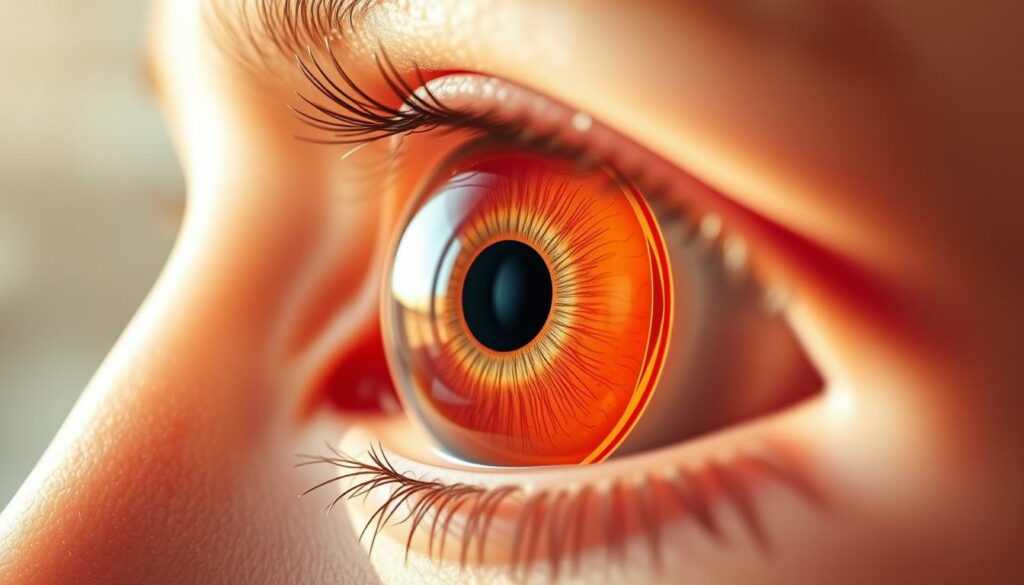
Understanding the precise anatomy of your eye is essential for addressing vision problems. The shape and structure of the eyeball and cornea significantly impact how light is processed, making them key factors in the development of myopia.
The Impact of Digital Devices on Your Eye Health
Digital devices have become an integral part of our daily lives, but their impact on eye health is a growing concern. While these devices offer undeniable benefits, their constant use can affect your vision and overall eye wellness. Studies show that prolonged screen time is linked to eye strain and can worsen conditions like myopia by altering how your eyes process light.
How Screen Time Affects Vision
- Prolonged screen time can cause eye fatigue and digital eye strain, leading to discomfort and blurred vision.
- Constant exposure to digital light can alter how your eyes adjust to brightness, making it harder to focus.
- Research highlights a correlation between increased screen time and a higher incidence of myopia, particularly in children and young adults.
- Extended device use can affect your ability to focus on distant objects, potentially worsening vision clarity.
- Monitoring your screen time and taking regular breaks can reduce these adverse effects on your vision.
- While digital devices are essential, incorporating eye-friendly habits can support long-term eye health.

Understanding how digital devices impact your eyes is crucial for maintaining clear vision and preventing long-term issues. By being mindful of your screen time and adopting simple protective measures, you can enjoy the benefits of technology while safeguarding your eye health.
Recognizing Myopia: Signs, Symptoms and Diagnosis
Recognizing the signs of myopia is crucial for early intervention and effective management. Myopia, or nearsightedness, often develops gradually, making it essential to monitor your vision health closely.
Common Symptoms of Nearsightedness
- Blurred vision for distant objects: Difficulty seeing clearly at a distance is a primary symptom.
- Frequent headaches: Prolonged eye strain can lead to headaches.
- Eye strain: You might feel discomfort or fatigue after focusing on screens.
- Squinting: Constantly squinting to see clearly can indicate vision problems.
When to Visit Your Eye Doctor
If you notice recurring symptoms, it’s time to schedule an exam with your eye doctor. Early detection is key to preventing complications.
- Recurring symptoms: Persistent blurred vision or headaches warrant a visit.
- Diagnostic process: A comprehensive eye exam will assess your vision and provide a clear diagnosis.
Don’t wait until symptoms worsen. Acting quickly can prevent further issues and protect your eye health.
How Eye Exams Diagnose Myopia in Adults and Children
Regular eye exams play a vital role in detecting vision problems early. For both adults and children, these exams are essential for maintaining healthy vision and addressing issues like myopia.
Adult Eye Exam Procedures
An adult eye exam typically starts with a visual acuity test. This assesses how well you see objects at a distance. Your doctor may use a phoropter to determine the correct lens prescription, ensuring clear vision. Retinoscopy might also be used to measure the refractive error, helping diagnose conditions like myopia. After these tests, your doctor discusses the results and recommends the appropriate treatment, which could include glasses, contacts, or other corrective measures.
Children’s Vision Screenings and Early Detection
Children’s eye exams are designed to be engaging and non-invasive. The first exam should occur by the age of 3, with another before starting school. For younger children, doctors use tools like retinoscopy to check for vision issues without requiring the child to read or respond. Older children may undergo a visual acuity test and use a phoropter to determine any needed prescription. Early detection is crucial, especially for those with a family history of myopia, as it allows for timely intervention and better management of vision health.
| Aspect | Adult Eye Exams | Children’s Eye Exams |
|---|---|---|
| Purpose | Detect vision problems, correct refractive errors | Early detection of vision issues, monitor development |
| Tools Used | Phoropter, retinoscope | Retinoscopy, visual acuity tests |
| Recommendations | Annual exams for maintaining eye health | Exams at key developmental stages (6 months, 3 years, before first grade) |
Regular eye exams are crucial for both adults and children. They help in early detection of vision problems, ensuring timely intervention and better management of eye health. By understanding the procedures and importance of these exams, you can take proactive steps to protect your vision and that of your children.
Risk Factors and Contributing Causes
Understanding the factors that contribute to vision problems can help you take proactive steps to protect your eyes. Several key elements increase the risk of developing nearsightedness, and recognizing them is the first step toward better eye care.
A family history of the condition is a significant cause. If one or both parents have the issue, the likelihood of you experiencing it increases. Studies show that children with one affected parent have a higher chance, and this risk nearly triples if both have it.
Extensive screen time and near work, such as reading or using digital devices, also play a role. Spending long hours focusing on close objects can strain your eyes and contribute to vision problems. Additionally, limited outdoor time has been linked to a higher risk of developing the condition, as natural light and broader focal points are essential for healthy eye development.
Both genetic and environmental factors contribute to why this condition occurs. By addressing these causes and adopting healthier habits, you can reduce your risk and protect your vision for years to come.
Treatment Options for Myopia: Glasses, Contacts, and Surgery
Managing myopia effectively often involves a combination of corrective measures and lifestyle adjustments. Whether you prefer non-invasive solutions or more permanent fixes, there are several treatment options available to suit your needs.
Corrective Lenses and Prescription Options
Glasses and contact lenses are the most common ways to correct nearsightedness. Corrective lenses work by refracting light properly before it enters your eye, ensuring images focus clearly on your retina. Your eye doctor will determine the exact prescription during a comprehensive eye exam, which includes tests like visual acuity and refraction assessments.
When choosing between glasses and contacts, consider your lifestyle. Glasses are easy to use and come in various styles, while contact lenses offer unobstructed vision and are great for active individuals. Advanced options like multifocal or toric lenses can address multiple vision issues at once.
Surgical Procedures and Innovations
For those seeking more permanent solutions, surgical options like LASIK and PRK are popular choices. These procedures reshape your cornea to improve how your eye focuses light. LASIK involves creating a thin flap in the cornea, while PRK removes the outer layer to reshape the underlying tissue. Both can significantly reduce or eliminate your dependence on corrective lenses.
Another innovative solution is the implantable collamer lens (ICL), which is placed inside the eye without altering the cornea. This option is ideal for individuals with high prescriptions or those who want a reversible procedure.
Your choice of treatment should be based on the severity of your condition and personal preferences. Consulting with an eye care professional will help you determine the best option for your unique situation.
Innovative Approaches to Manage Myopia Progression
Researchers are continuously exploring new ways to slow the progression of myopia, offering hope for those affected by this condition. Recent advancements in pharmacological treatments and contact lens designs are showing promising results in managing high myopia, particularly in children and young adults.
Pharmacological Interventions and New Research
One of the most notable breakthroughs is the use of low-dose atropine drops. Studies have shown that atropine concentrations between 0.01% and 0.05% can slow myopia progression by over 50%. This treatment is particularly effective when combined with orthokeratology (ortho-K), a non-surgical method that reshapes the cornea during sleep.
Another innovative approach is the use of multifocal contact lenses. Lenses like MiSight have been shown to slow progression by 30-50% compared to standard single-vision lenses. These lenses work by reducing the eye’s growth rate, particularly in children. Additionally, ortho-K lenses have demonstrated effectiveness in slowing axial elongation by 30-60%, making them a viable option for those with high myopia.
| Treatment Type | Effectiveness | Description |
|---|---|---|
| Atropine Drops | 50% reduction | Low-dose atropine (0.01%-0.05%) slows axial elongation. |
| Multifocal Lenses | 30-50% reduction | Designed to reduce eye growth rate, ideal for children. |
| Orthokeratology | 30-60% reduction | Reshapes cornea during sleep; effective for high myopia. |
While these treatments are promising, regular eye exams remain essential. Ongoing research continues to expand the scope of effective myopia management, offering hope for better vision health in the future.
Vision Correction and Lifestyle Adjustments
While corrective lenses are essential for managing vision problems, they are just one part of maintaining healthy eyes. Simple lifestyle adjustments can significantly enhance your vision quality and reduce eye strain. For instance, ensuring proper lighting when reading or working can prevent unnecessary strain on your eyes.
A key strategy is the “20-20-20 rule”: every 20 minutes, look away from your screen and focus on something 20 feet away for 20 seconds. This simple practice can help reduce digital eye strain and maintain clear vision. Additionally, taking regular breaks from close-up tasks allows your eyes to relax and recover.
Pairing corrective measures with healthy habits, such as limiting screen time and spending time outdoors, can provide long-term benefits for your eye health. By combining professional correction with mindful lifestyle choices, you can create a comprehensive approach to protecting your vision and maintaining clarity for years to come.
Maintaining Long-Term Eye Health in the Digital Age
Protecting your vision in today’s tech-driven world requires a proactive approach. With screens being an integral part of daily life, adopting healthy eye habits is essential to prevent strain and maintain clarity.
Practical Tips for Eye Protection
Start by scheduling regular eye exams at least once a year. These exams can detect issues early, ensuring timely interventions. When working on digital devices, position your screens at eye level and an arm’s length away to reduce strain.
Daily Habits to Support Vision Health
Adopt the 20-20-20 rule: every 20 minutes, look at something 20 feet away for 20 seconds. This simple practice can significantly reduce digital eye strain. Additionally, wear protective eyewear outdoors to shield your eyes from harmful UV rays.
| Tip | Benefit |
|---|---|
| Schedule regular eye exams | Early detection of vision problems |
| Follow the 20-20-20 rule | Reduces eye strain during work |
| Optimize workspace ergonomics | Enhances visual comfort |
By combining these habits with a balanced diet and proper hydration, you can safeguard your vision for years to come. Consistent, small steps in your daily routine make a significant impact on your long-term eye health.
Conclusion
In today’s tech-driven world, protecting your vision is more important than ever. Myopia, or nearsightedness, has become a growing concern, especially with the increasing use of digital devices. This condition makes distant objects appear blurry and can significantly impact your daily life.
Digital devices play a major role in eye strain and the development of myopia. Prolonged screen time, especially when combined with limited outdoor activities, can increase your risk. Regular eye exams are crucial for early detection and effective treatment, ensuring your vision remains clear for years to come.
Understanding the risk factors, such as family history and excessive near work, can help you make lifestyle adjustments to protect your eyes. From corrective lenses to innovative surgical procedures, there are various treatment options available to manage myopia.
If you notice any changes in your vision, don’t hesitate to consult your eye doctor. Taking proactive steps now can ensure healthy vision as you age. Remember, safeguarding your eye health is a lifelong commitment.
FAQ
What causes myopia, and how does it affect the eye?
Myopia, or nearsightedness, occurs when the eyeball is slightly elongated or the cornea is too curved, causing light to focus in front of the retina instead of directly on it. This refractive error can lead to blurry distant vision and may progress over time if left untreated.
Can children develop myopia, and what are the signs?
Yes, myopia often begins in childhood and can progress during teenage years. Signs include difficulty seeing distant objects, frequent headaches, and squinting to see clearly. Regular eye exams are crucial for early detection and correction.
How do contact lenses help correct nearsightedness?
Contact lenses refract light properly on the retina, improving vision. They are a convenient option for people who prefer not to wear glasses. However, proper care is essential to avoid eye infections or discomfort.
What are the risks of high myopia?
High myopia increases the risk of serious eye conditions, such as retinal detachment or glaucoma. Regular monitoring by an eye doctor is essential to manage these risks and ensure optimal eye health.
Can surgery correct myopia permanently?
Yes, surgical options like LASIK or PRK can reshape the cornea to improve vision permanently. However, surgery may not be suitable for everyone, especially those with certain eye conditions or high prescriptions. Consult an eye doctor to determine if surgery is right for you.
How often should I get an eye exam to monitor myopia progression?
Adults and children with myopia should have a comprehensive eye exam at least once a year. Children, especially, may need more frequent exams to track changes in their prescription and eye health.
What lifestyle changes can help manage myopia?
Spending time outdoors, following the 20-20-20 rule during screen time, and maintaining a healthy diet rich in eye-friendly nutrients can support eye health and slow myopia progression.
Can myopia be prevented?
While myopia cannot be completely prevented, early intervention and regular eye care can help manage its progression. Wearing corrective lenses as prescribed and adopting healthy eye habits are key steps in maintaining vision health.
What Are Eye Floaters | How to Treat Eye Floaters Naturally Imagine looking up at a clear blue sky or Read more
Have you ever experienced a sudden, involuntary movement of your eyelid? This common phenomenon is known as eye twitching, and while Read more

Dry eye syndrome, also known as dry eye disease, is a common yet often misunderstood condition that affects millions of Read more
In today’s digital age, eye strain has become a common issue for many of us. Whether you’re working on a computer, reading Read more